What the Weather Here Does to It
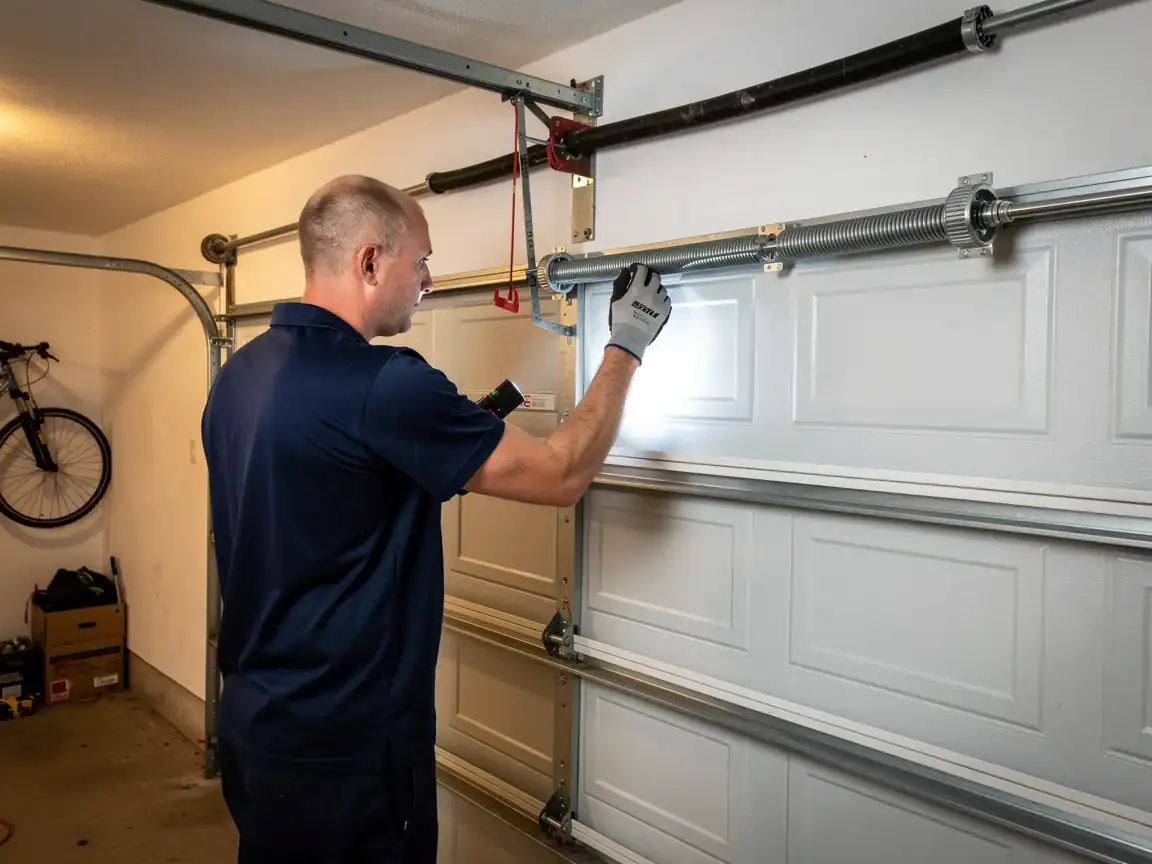
Woodbury sits in a cold-moderate climate band, which means the steel in your door - track, springs, hinges - goes through a real temperature swing every year, not just a cold snap here and there. Metal contracts in January and expands again by July, and every joint on the door feels that cycle whether it's a 1960s original or a replacement from ten years ago.
Housing in this area was mostly built between 1956 and 2002, with the bulk of it going up in the 1960s and 70s. That matters because a lot of those original torsion setups are still in the garage, just quieter about their age than you'd expect. Cold makes grease stiffen, which makes a spring that used to roll smooth start to catch and pop as it turns. It's not that the door broke overnight - it's that the lubricant gave up in the cold before the hardware did.
We won't tell you every noise means a part failed. Some of it is just old grease fighting January. But a noise that only shows up below freezing and goes away in summer is still worth a look, because it's usually the first sign of a spring or roller that's closer to the end than it looks.
When to Get Help
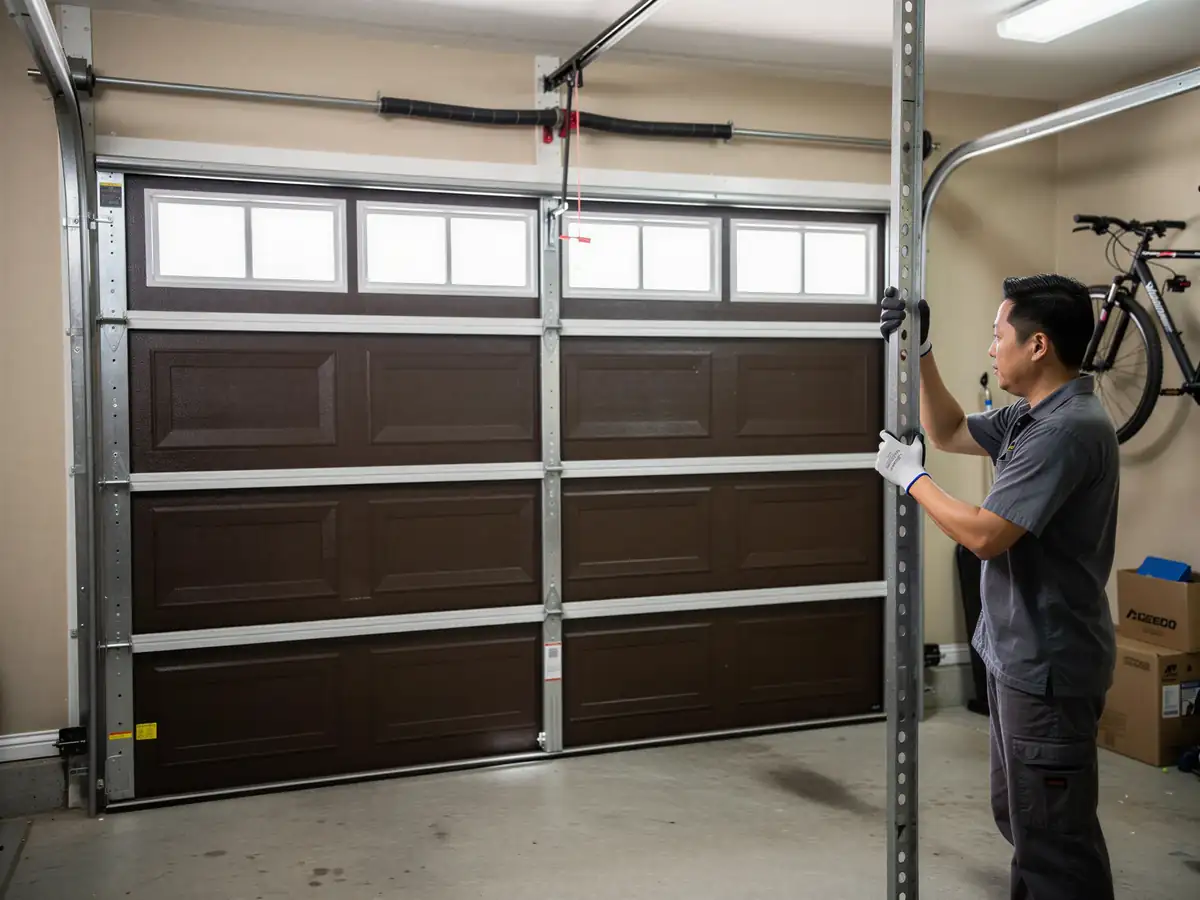
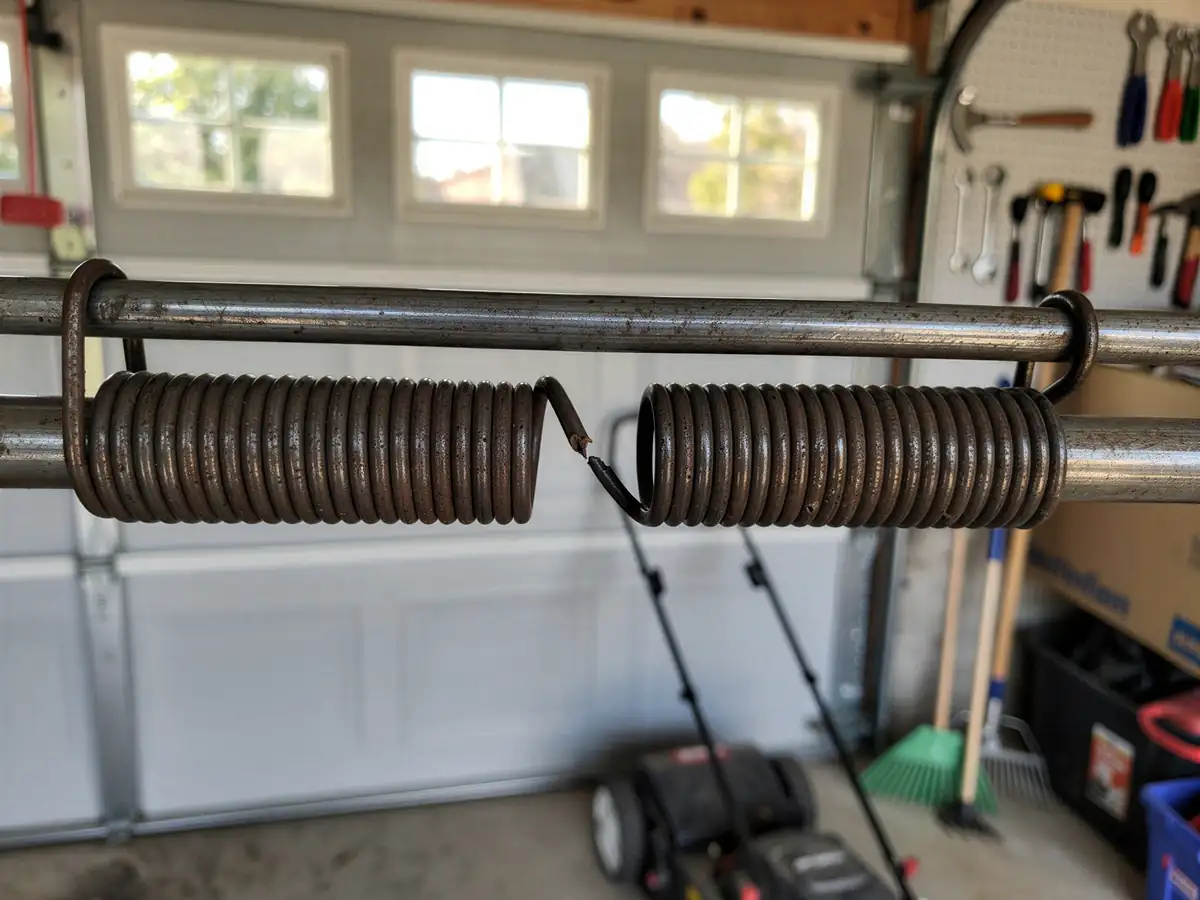
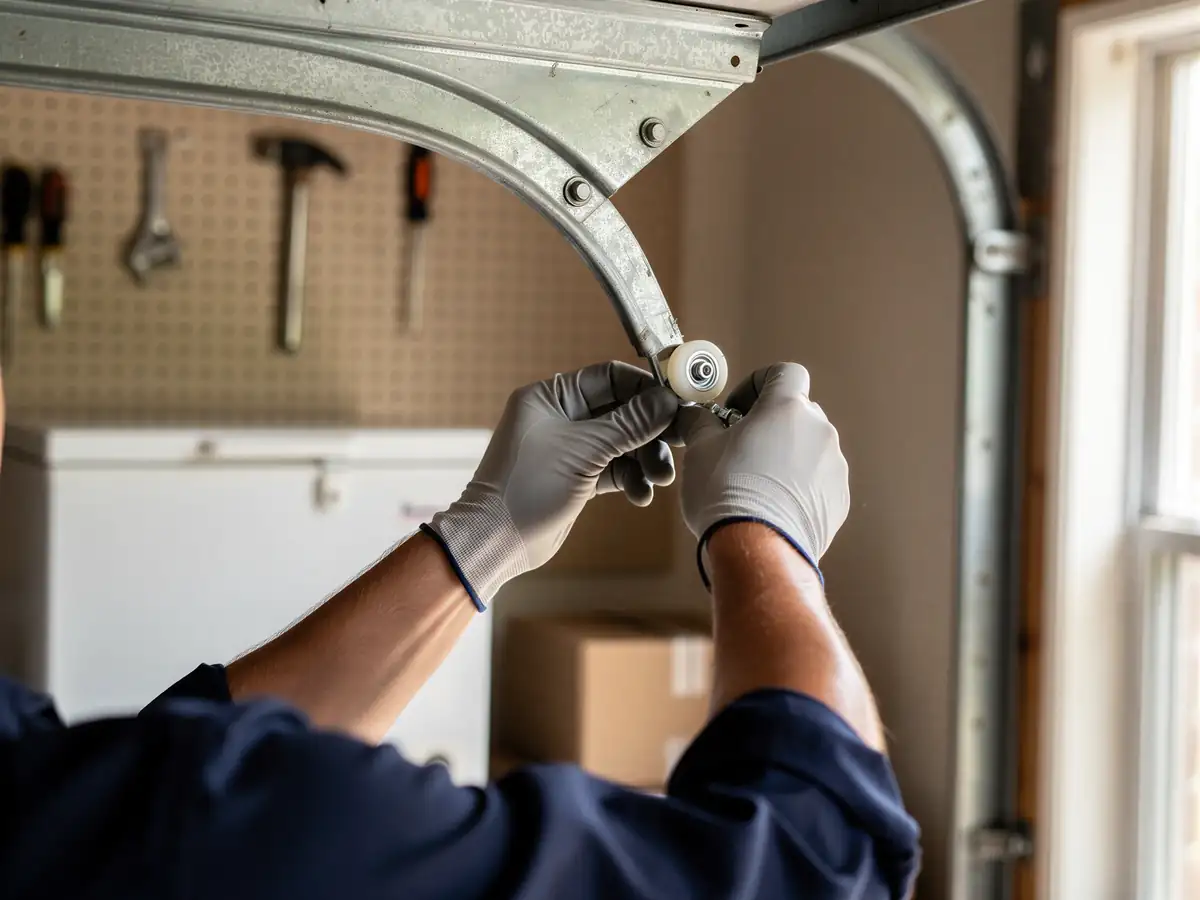
A grinding noise when the door travels usually means a roller that's worn flat or a track that's gone slightly out of line - common on houses from the 1960s-70s where the track was never upgraded. A loud bang followed by the door refusing to move is almost always a broken spring, and that's not a call to put off; the opener will keep trying to lift the door on one spring and strain the motor doing it.
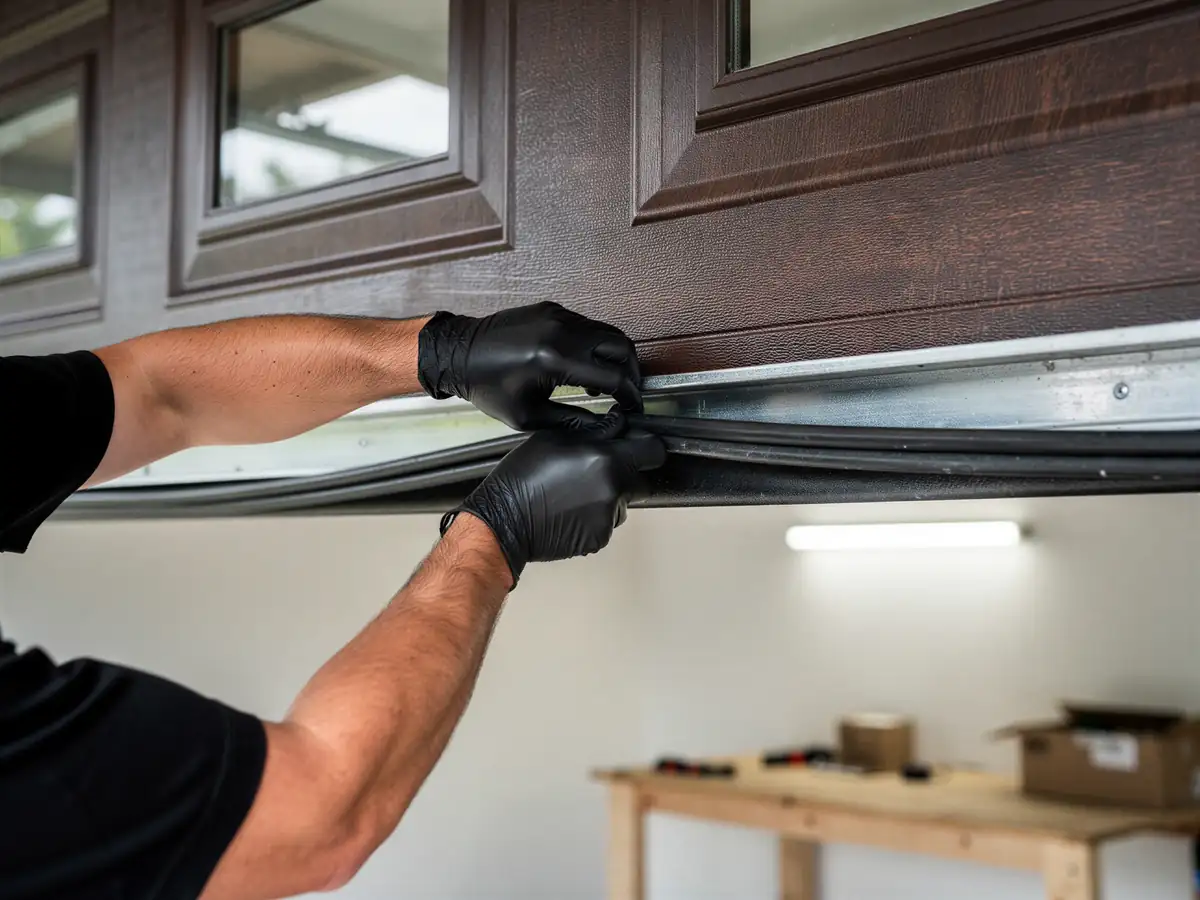
A rhythmic thump as the door opens or closes often points to a panel seam or a hinge that's loosened over the years of expansion and contraction we get here. Scraping along the sides, rather than from the track itself, can mean the door's gone slightly off its rails - worth checking before it jumps the track entirely.
Here's the honest limit: if your opener and door hardware are both original to a house built in the 1960s or 70s, a repair sometimes costs more over two years than just replacing the unit once. We'll tell you that straight rather than keep billing small fixes on something that's done.
The Situation
The service area runs through roughly 33 named neighborhoods of varying age
But the throughline is the same: housing built mostly from 1956 through 2002, median right around 1976. That's a lot of original hardware still doing its job, decades past when most manufacturers expected it to.
Across the wider area there are about 168,356 households and 76,978 owner-occupied houses
With median household income around $93,233 - solid enough that most owners here replace a door system once it's clearly done rather than patching it indefinitely. That's useful context: when we say a repair isn't worth it, it's usually because the math doesn't make sense for the house, not because we'd rather sell you new.
- 168,356 households
- 76,978 owner-occupied
- $93,233 median household income
Woodbury sits a few miles from Newport, Afton, Lake Elmo, Oakdale, and South St. Paul
Each with its own mix of housing ages, but similar cold-climate wear on springs and tracks. We're not claiming jobs in those towns; it's just useful to know the regional pattern isn't unique to one street.
Season by Season
Late fall is when the first noises show up - grease that was fine in August starts to thicken as temperatures drop, and a spring that was quiet all summer starts to catch. This is the easiest season to catch a problem before it becomes a stuck door.
Midwinter is when springs actually break, not because cold makes steel weaker exactly, but because cold steel is less forgiving of fatigue that's already there. A spring on a 1960s or 70s track that's been cycling for decades picks the coldest week to finally let go.
Spring brings the thaw, and with it, moisture in a garage that's been sealed up all winter - this is when tracks that were slightly bent in the cold start showing it, because the door's finally moving through its full range again at normal speed.
Summer is the quiet season for most of this housing stock. Heat doesn't stress these systems the way cold does. If your door's going to act up, odds are good it already told you in January - the quiet months are a good time to get ahead of next winter instead of waiting for the bang.