What the Weather Here Does to It
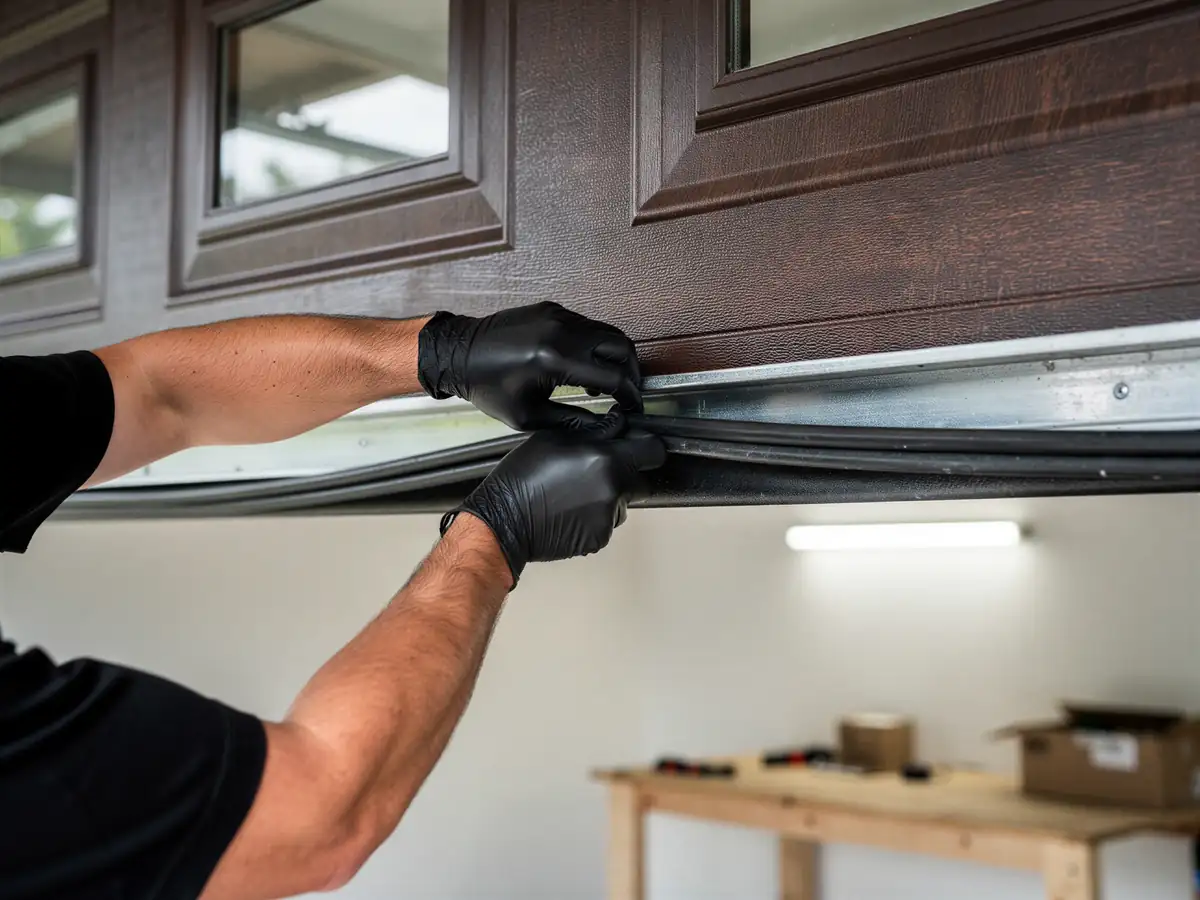
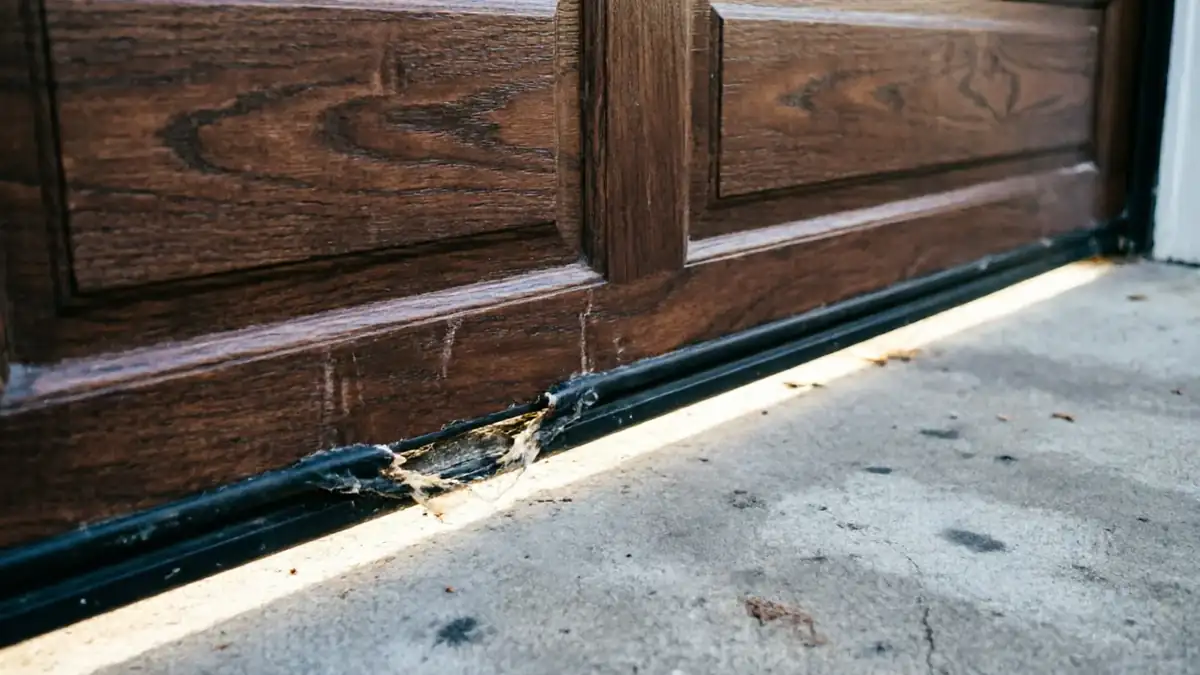
Woodbury sits in a cold-moderate climate band, and that matters more for a garage door than most homeowners expect. The bottom seal and the weather stripping along the jambs are rubber or vinyl, and rubber hardens in repeated freeze-thaw cycles. A seal that was pliable in October turns stiff by January, and once it's stiff it stops hugging the slab. That's when you get the draught along the floor, the cold streak that runs across the garage and into the house if there's a shared wall.
Most of the housing stock here went up between 1956 and 2002, with a lot of it clustering around the mid-1970s. Doors and seals from that era, or replacements installed to match the original opening, weren't built with today's thicker bottom astragal in mind. Older tracks and jamb seals sized for an older door can leave gaps even when the seal itself still looks fine. On a slab that's settled or slightly uneven - common on houses now approaching fifty years old - the seal can look intact on one side of the door and be lifted an inch off the concrete on the other.
The freeze-thaw cycle also works on the panels themselves if they're steel without a thermal break, since condensation forms on the inside face and can start rust at the bottom corners over the years.
When to Get Help
If you can see daylight under the door on a sunny afternoon, the seal has already failed - don't wait for a harder freeze to make the gap worse. Same goes for a seal that's cracked or has pulled away from its track in sections; once it's splitting, it's not going to reseat itself.
Call sooner rather than later if you notice frost or ice forming along the bottom seal on cold mornings. That's condensation finding the gap and freezing there, and it usually means the seal has lost contact with the slab, not just gotten brittle. Left alone through a full winter, that ice can work into the seal's channel and crack the track it sits in, turning a seal swap into a bigger job.
One honest limitation: we don't recommend replacing just the bottom seal on a door that's original to a mid-1970s build if the track and astragal channel are also worn, because a new seal in an old channel won't hold its shape long. In that case, the channel needs attention first or the fix doesn't last through a Minnesota winter.
The Situation
Across the Woodbury service area, we're looking at roughly 76,978 owner-occupied houses out of 168,356 households total
And a housing stock that runs 1956 to 2002 with a median build year around 1976. That's a wide spread of door ages and seal types on the road at any given time - some original single-piece doors with no bottom seal channel at all, some 1990s sectional doors with the first generation of vinyl astragal, and newer replacements mixed in.
- 76,978 owner-occupied
- 168,356 households
Median household income in the area sits at $93,233
Which tends to mean owners replace a door outright rather than patch it repeatedly once a seal problem turns into a track or panel problem. That's a fair call on a door that's been through thirty-plus Minnesota winters.
We also cover the towns around Woodbury
Newport, four miles off; Afton, five; Lake Elmo, six; Oakdale, six; and out to South St. Paul and St. Paul Park at six miles as well. The housing ages and seal issues we see on those calls track closely with what we see inside Woodbury itself, since the building booms that shaped the area ran through the same decades.
Season by Season
Fall is seal-check season. Before the first hard freeze, a seal that's going to fail for winter usually shows its cracks - literally - while it's still warm enough to inspect without your hands going numb.
Winter is when a marginal seal becomes an obvious problem. Cold-moderate winters here mean repeated swings through freezing, and that's the cycle that finishes off a seal already thinning from age. This is also when ice at the base of the door shows up fastest, since any gap collects moisture from melting snow tracked in on tires.
Spring brings the thaw, and with it, settling. A slab that shifted slightly over winter can open a new gap even under a seal that held fine in December. Worth a second look in April even if the door seemed fine in January.
Summer is the easy season for seals, but it's a good time to deal with the track and channel work that a seal replacement sometimes needs, since there's no freeze risk hanging over the job and parts lead times are usually shorter than in peak winter call volume.