What the Weather Here Does to It
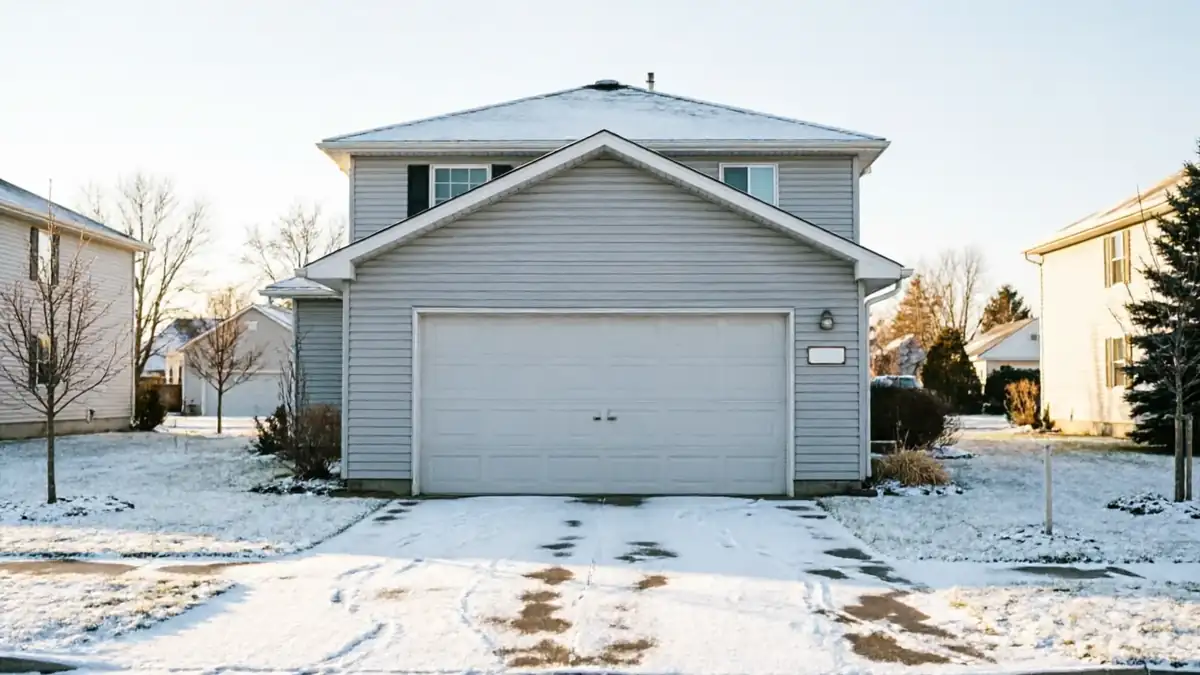
Woodbury sits in a climate band that's cold but not extreme - moderate cold, with real winters and a hard freeze that shows up reliably every year. A torsion spring is wound steel under tension, and steel gets brittle as it gets cold. It doesn't matter if the spring is new; cold makes the metal less forgiving on every cycle. What matters more here is age. Housing in this service area went up mostly between 1956 and 2002, with the median house dating to 1976, and that 1960s-70s wave of construction, the same one spread across the 33 named communities we track, means a lot of original torsion spring brackets are still in the rafters. A spring installed during that build wave has absorbed forty-plus winters of expansion and contraction. The first deep cold snap of the season is when a fatigued spring finally lets go - not because the cold caused the damage, but because it's the stress that tips something already near its limit. You'll hear it before you see it: a loud bang from the garage, usually first thing in the morning when the metal is coldest and stiffest.
When to Get Help
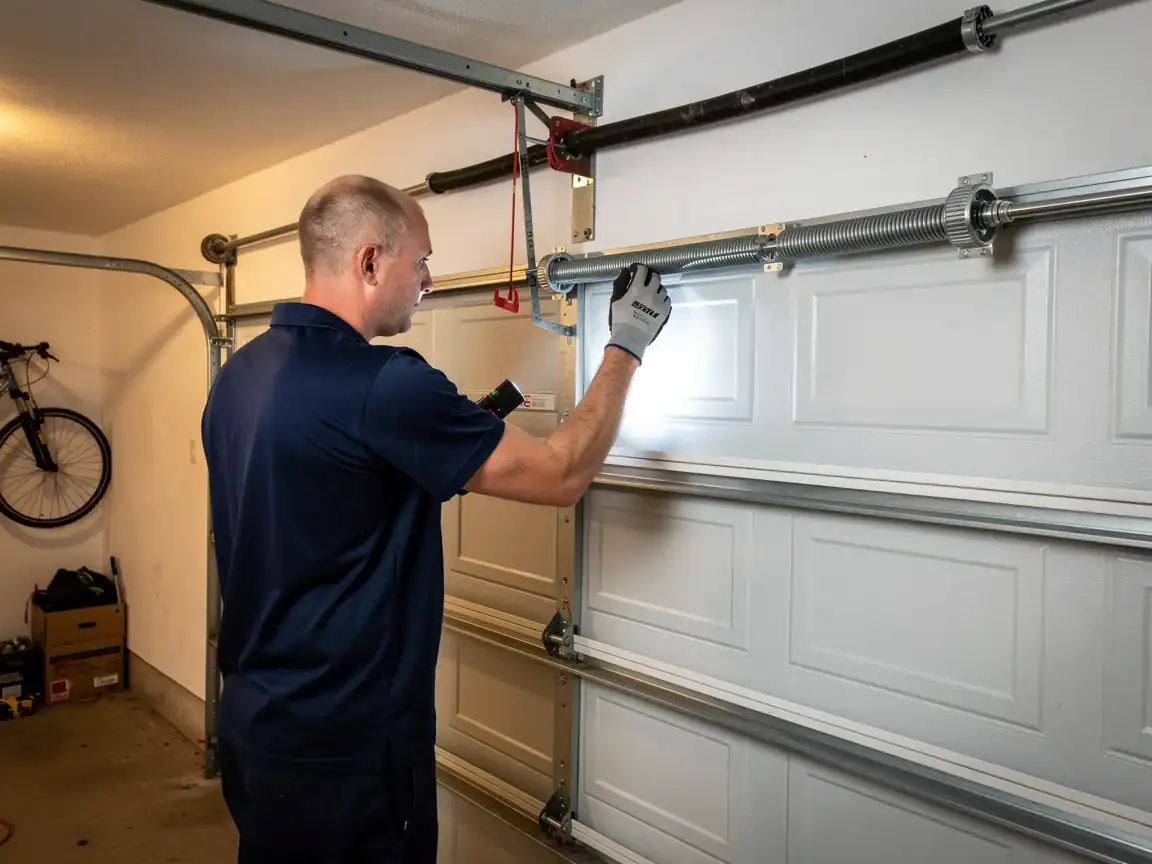
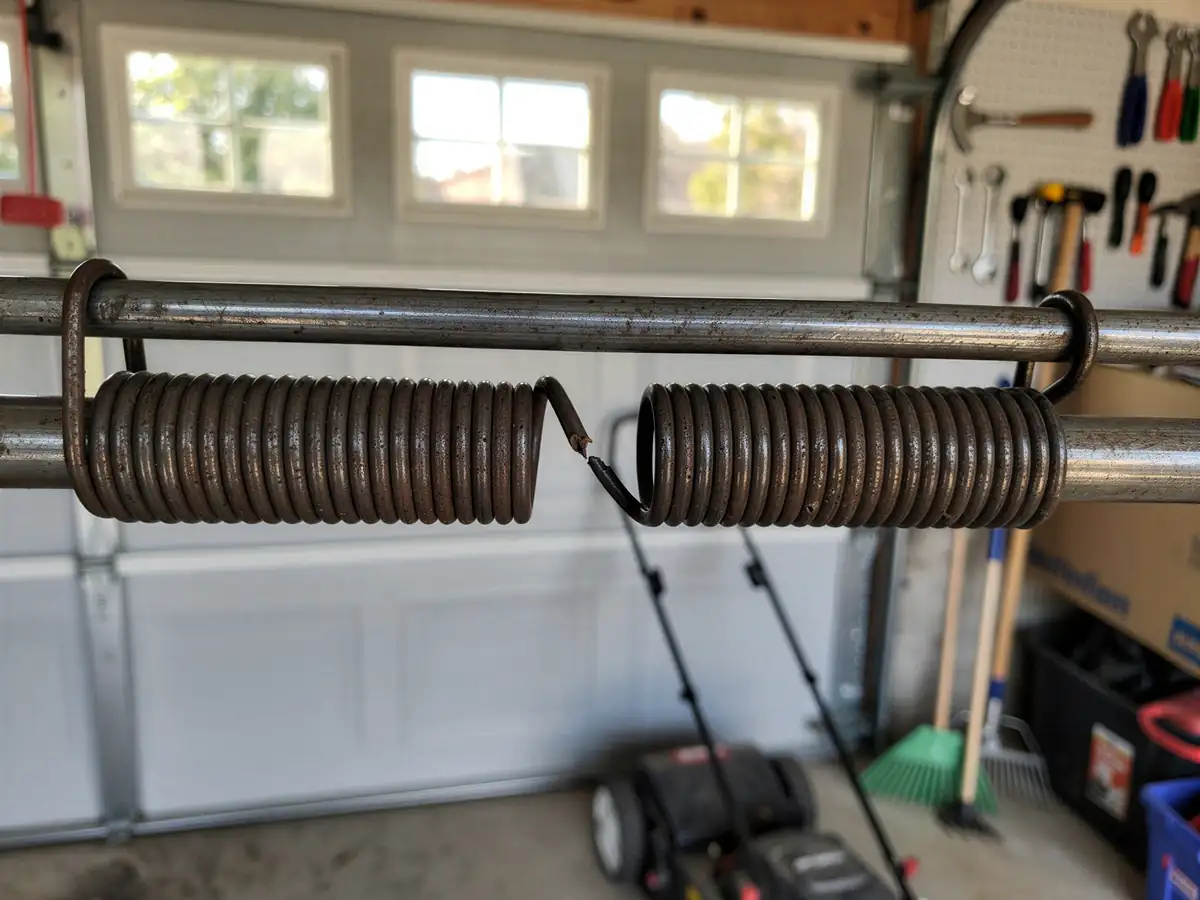
If the door won't budge, feels heavier than normal when you lift it by hand, or the opener strains and reverses without finishing the cycle, the spring is likely gone or going. A visibly separated spring - a gap in the coil where there shouldn't be one - means stop using the door and call. Running an opener against a broken spring puts the full weight of the door on the opener's gears, and that's a second repair stacked on the first. One honest limitation: we don't carry every spring size on the truck, especially for older doors still running nonstandard extension springs from a different era of construction. If your setup is uncommon, that can mean a parts order rather than a same-visit fix. We'll tell you that up front rather than make you wait around for a truck that can't finish the job.
Season by Season
Early winter is when the calls spike - that first real cold snap after a mild stretch catches a lot of aging springs off guard. Mid-winter, once everything's settled into the cold, failures taper off some, but a spring that survives the first freeze isn't off the hook; sustained cold still shortens its working life. Spring, with the freeze-thaw cycling, is harder on tracks and rollers than on the spring itself - ice forming and melting in the track can throw alignment off even on a door with good hardware. Summer is the quiet season for springs here, though it's a reasonable time to have one checked before the next cold stretch, especially on a door that's part of that original 1960s-70s stock. Fall is worth a look too, since a spring that's already stressed won't announce itself until the cold actually arrives, and by then you're dealing with it on a morning you didn't plan for.