Why It Happens Here
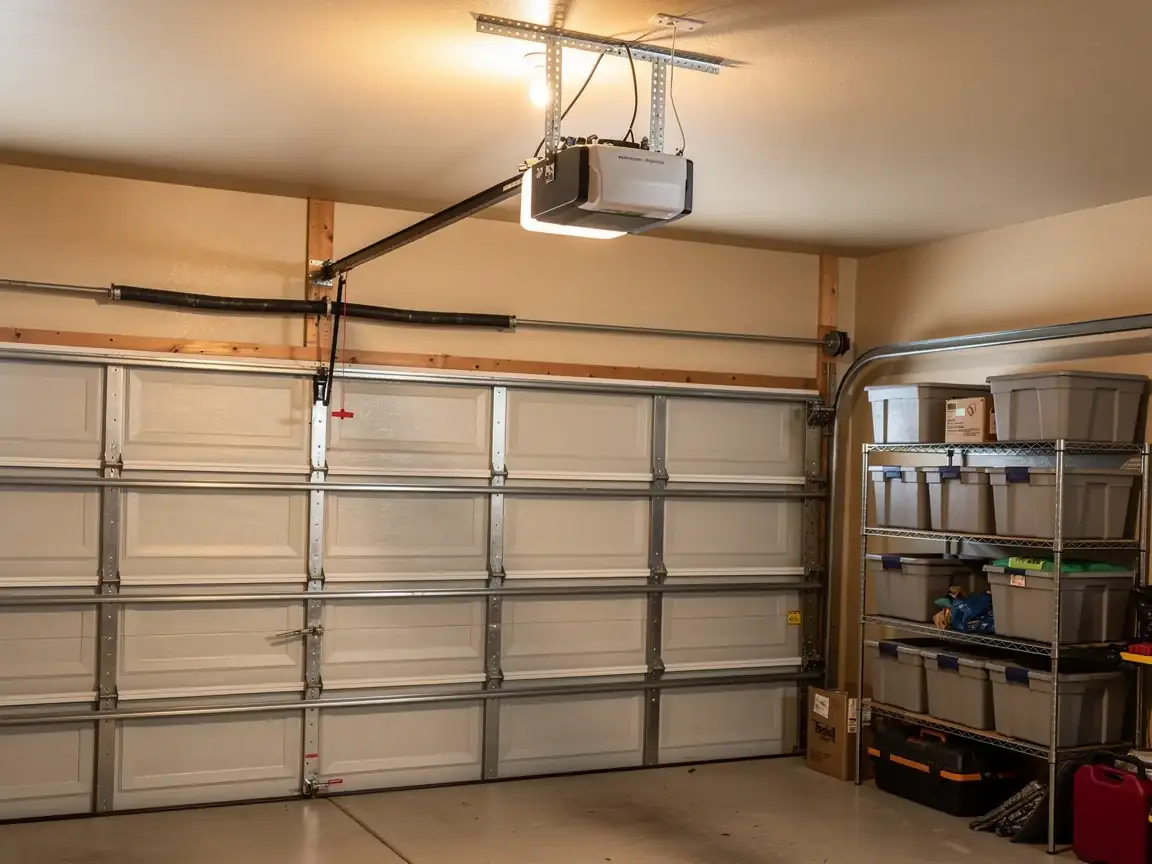
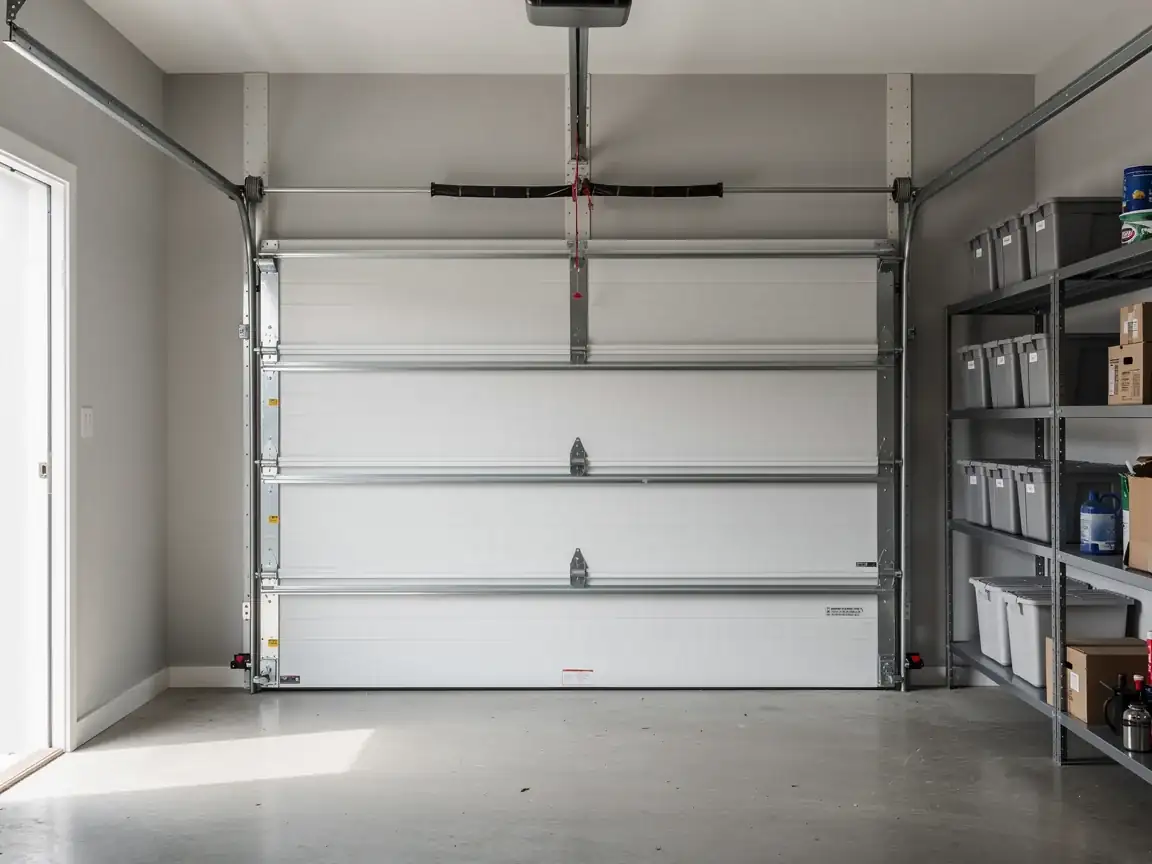
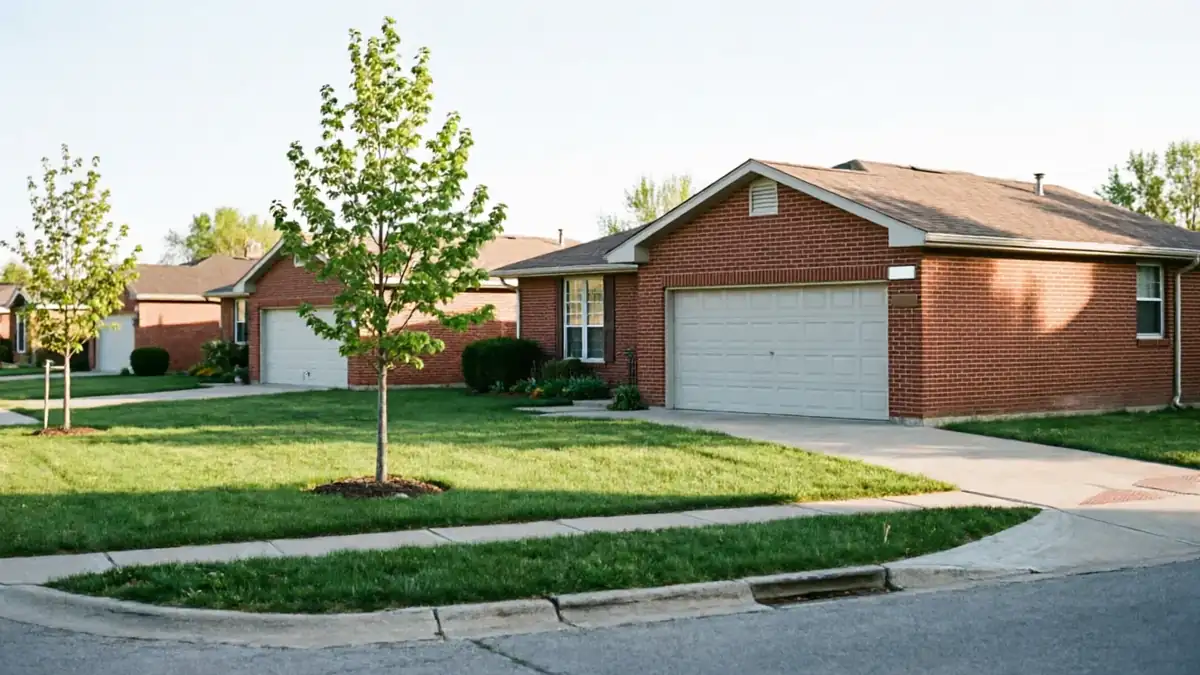
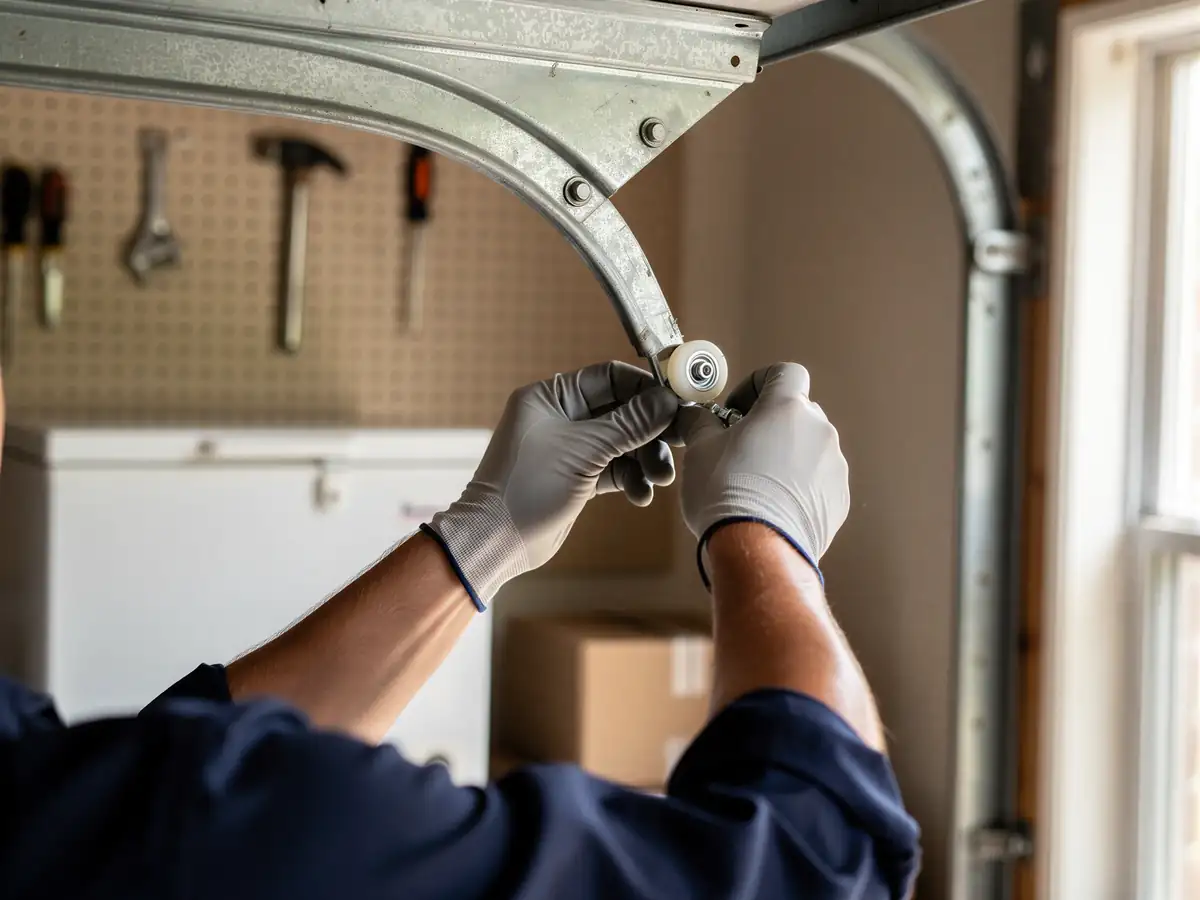
Richfield's housing stock mostly dates to around 1959, which puts it well ahead of the broader service area's median build year of 1976. Doors going up in that era came with steel rollers riding on open, unsealed bearings, set into tracks that were narrower and less forgiving than what's sold today. Nylon rollers didn't become standard until decades later, so if nobody's swapped the hardware since the house was built, you're very likely still running steel-on-steel. Add in a cold-moderate climate that swings the metal through freeze-thaw cycles every winter, and you get rollers that wear their bearings out, pit, and start binding in the track years before an owner expects trouble. This isn't a defect in the door - it's just what 1959 hardware does after six-plus decades of Minnesota winters. The track itself usually isn't the problem; it's the roller riding inside it losing its round shape and chewing up the rail edge as it goes.
How It Shows Up
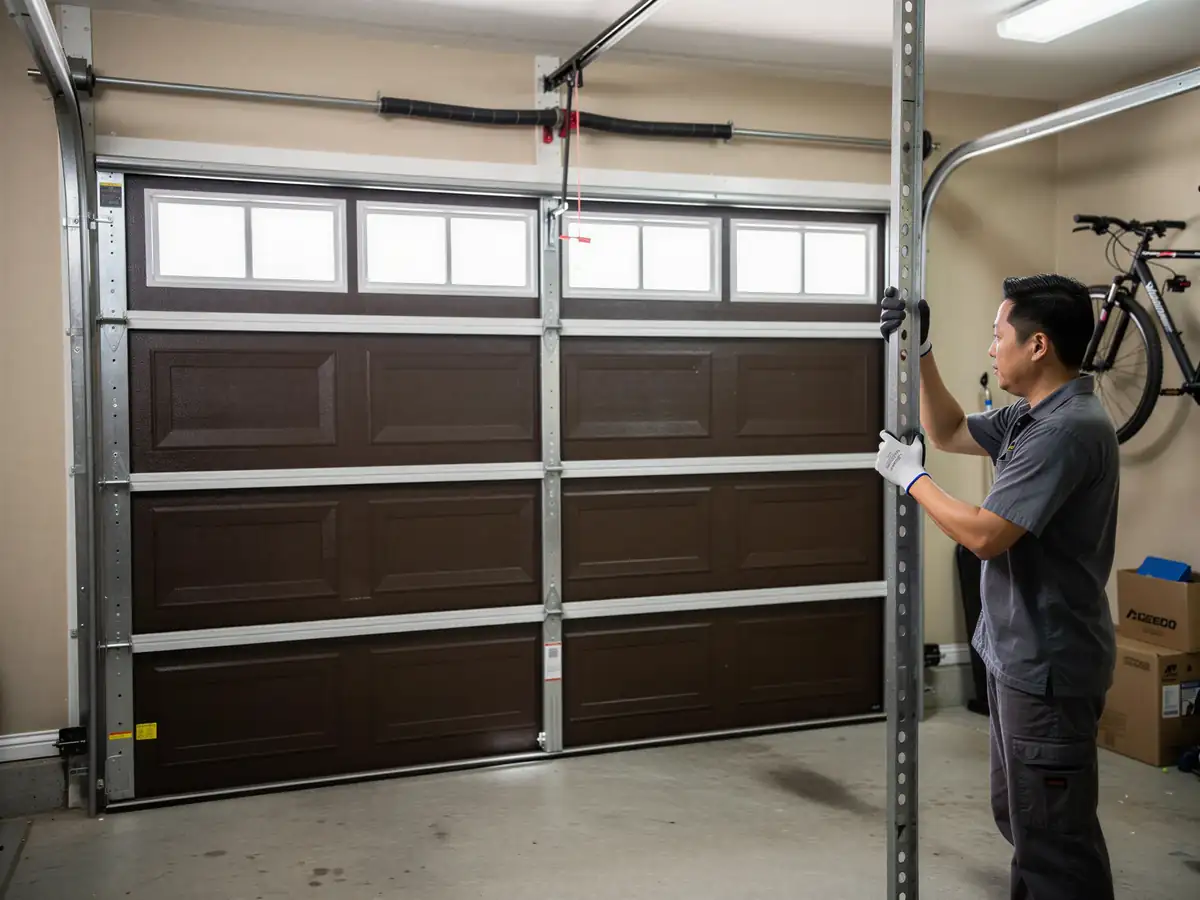
The door starts making a grinding or rhythmic clicking sound as it travels, especially on the last foot of opening or closing where older tracks tend to be most worn. You might see a slight hop or hesitation where the door visibly catches before continuing. On steel rollers specifically, look for flat spots - literal flat edges ground into what should be a round wheel - or rust flaking off onto the garage floor below the track. Some owners notice the door pulling slightly to one side as it moves, which usually means one roller is binding worse than its opposite number. None of this fails all at once. It gets louder and rougher over a few months, then one day a roller comes off its track entirely and the door won't move at all.
What Can Go Wrong
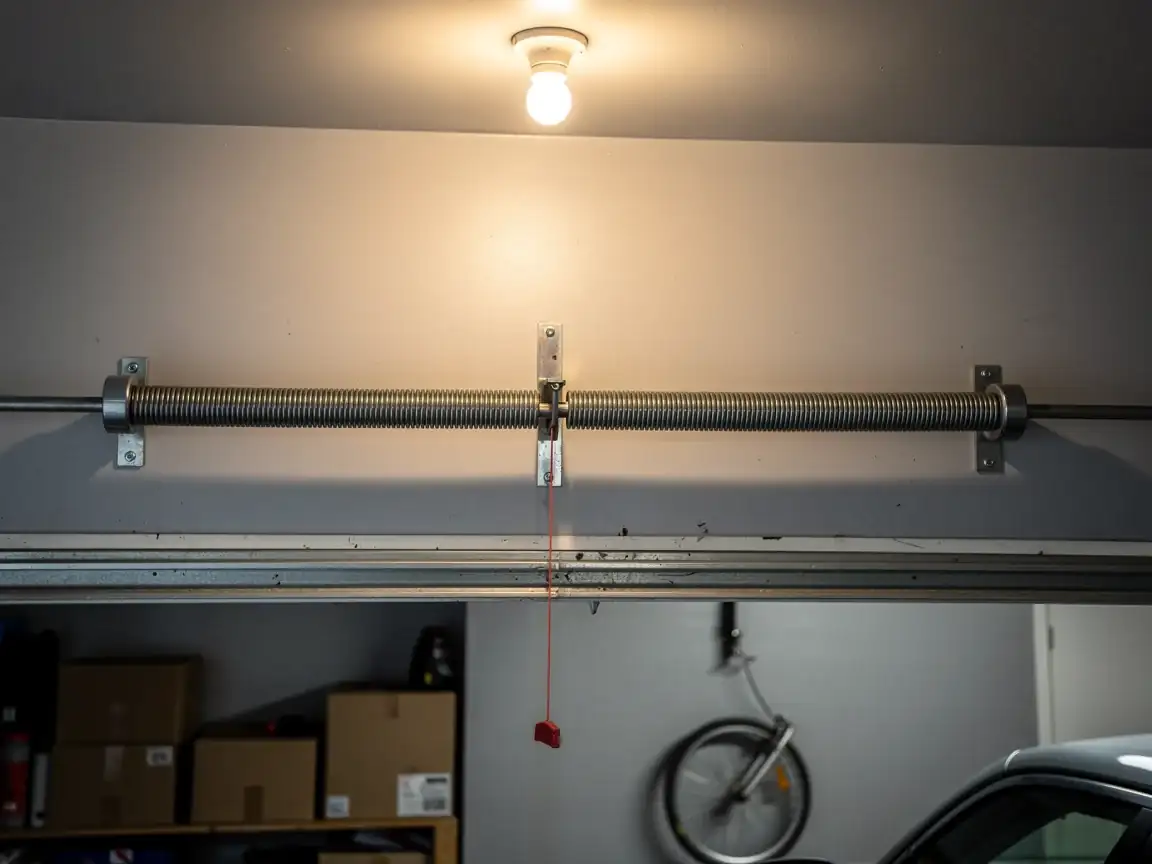
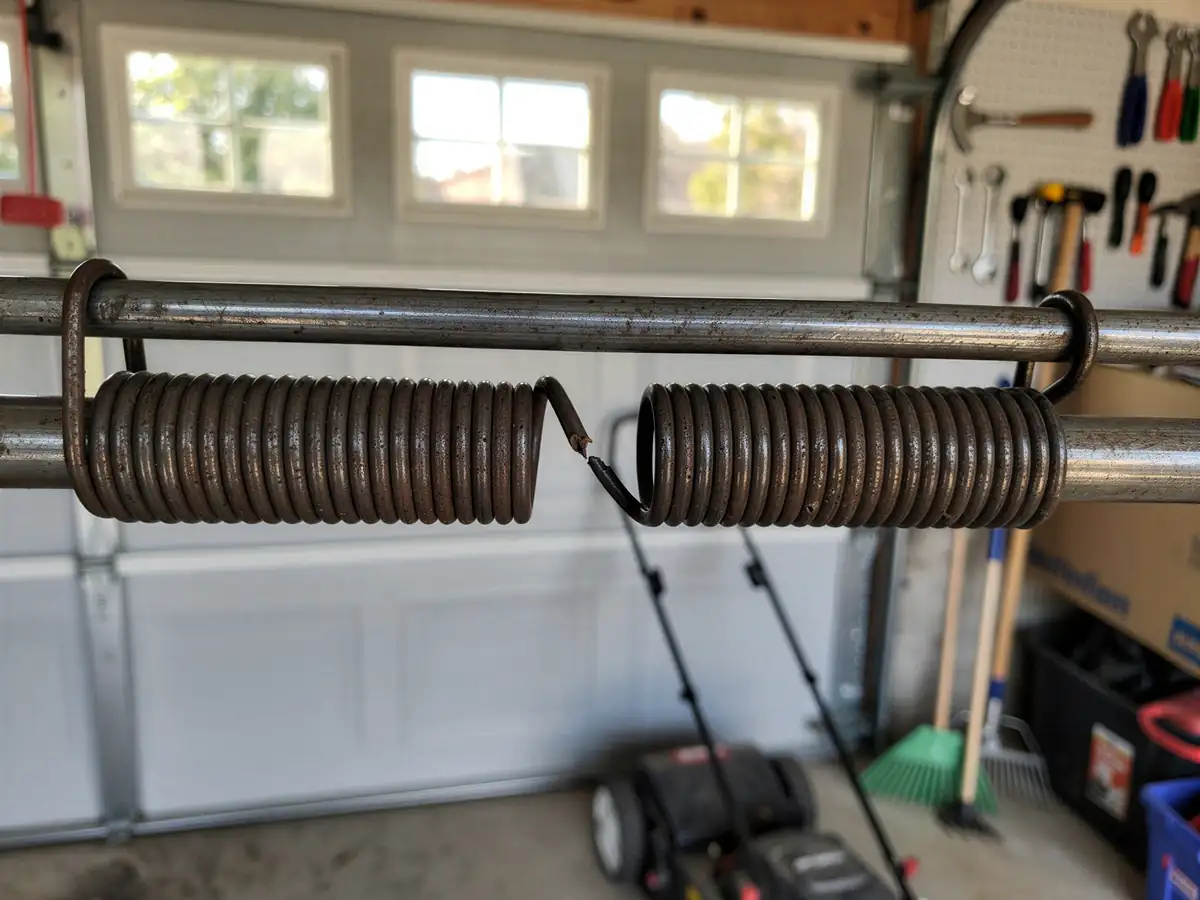
On a door this old, a roller job can turn into more than a roller job. If the track has been riding against a worn or flat-spotted roller long enough, the rail itself can develop a permanent bow that rollers alone won't fix - that's a track replacement, not a roller swap. We also sometimes find that the original extension springs common to 1959 construction are near the end of their life, and nobody wants to replace rollers today and a snapped spring next month. The honest call there is to flag it, not push it - if the springs still have life left, we leave them alone. Rollers failing on only one side of a double door can also point to a bent hinge or sagging panel rather than the roller itself, and swapping rollers on a door with that underlying problem just buys a few quiet months before the noise comes back.
What It Costs
We don't have a flat number to post here because roller counts, roller type, and whether the track needs adjustment alongside them all move the price, and we won't quote a job sight unseen. What we can tell you is that a straightforward roller swap on an otherwise sound 1959-era track is a small fraction of what a full track or spring replacement runs, which is exactly why catching the grinding sound early is worth the call. With Richfield's median household income at $84,055, against roughly $93,233 across the wider service area, we price the same job the same way regardless of which town it's in - the travel from Woodbury doesn't change the rate, it just changes the drive.