The DIY Question
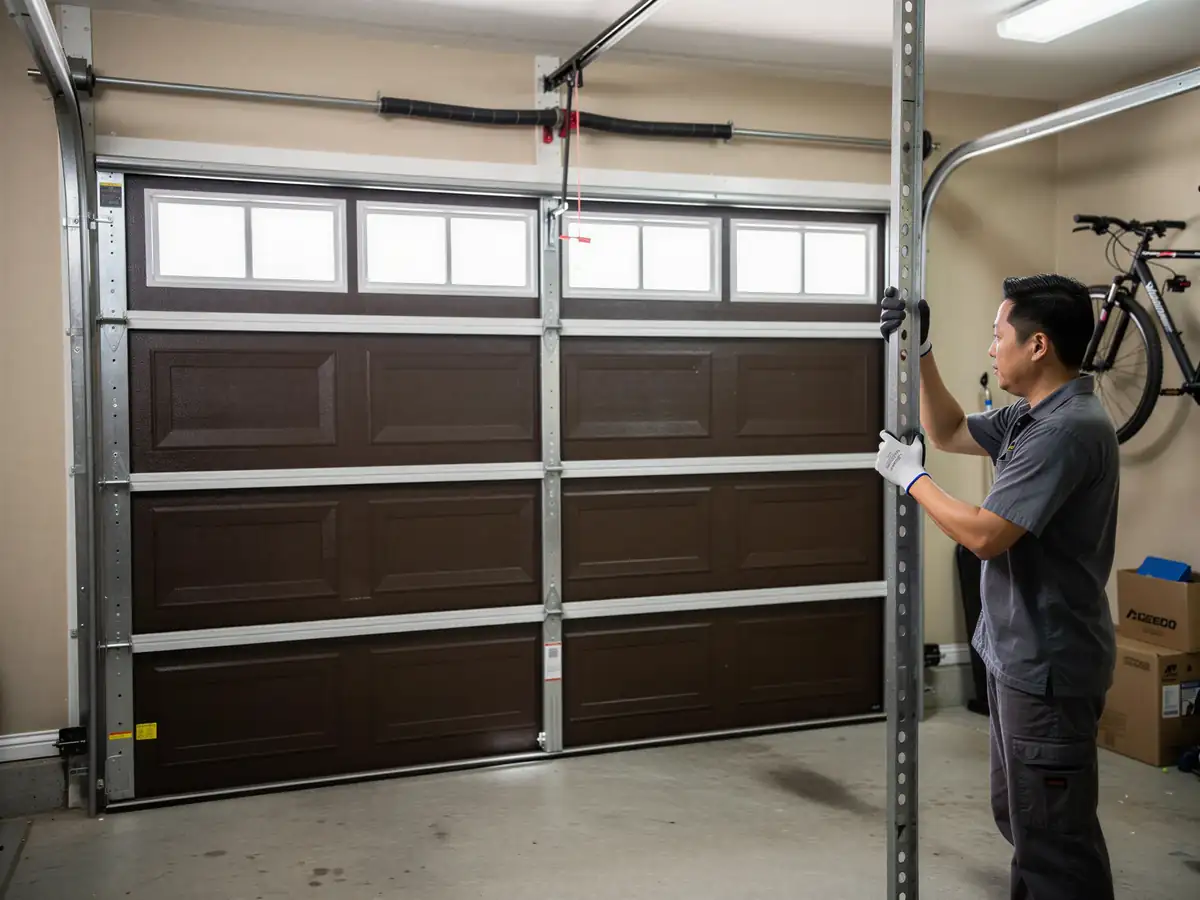
A broken torsion spring on a double door is not a job to learn on your own driveway. The spring is wound under enough tension to break a wrist or worse, and on a house built in the late 1960s or 70s - which is most of Roseville - you're often dealing with a size and winding setup that hasn't been made in decades. Extension springs on older single doors are a little more forgiving to look at, but they still store enough force to snap a cable or send a bracket across the garage.
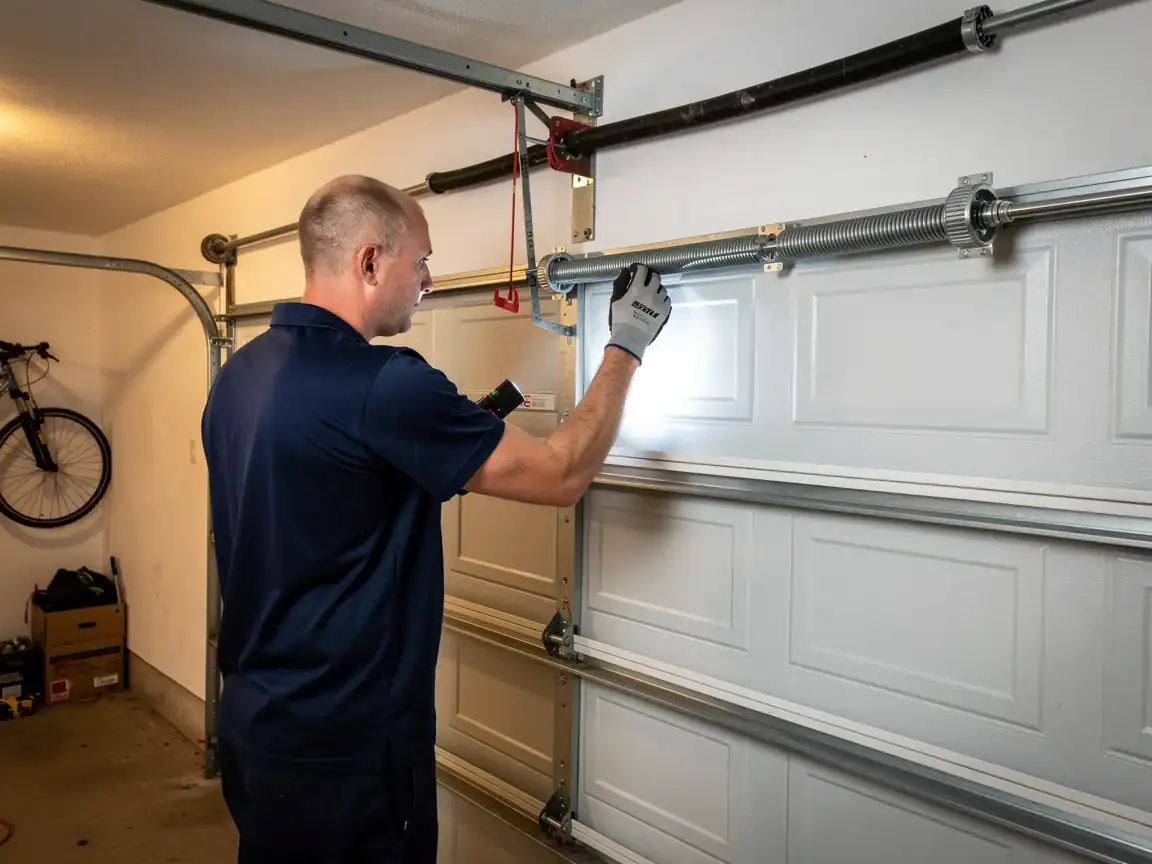
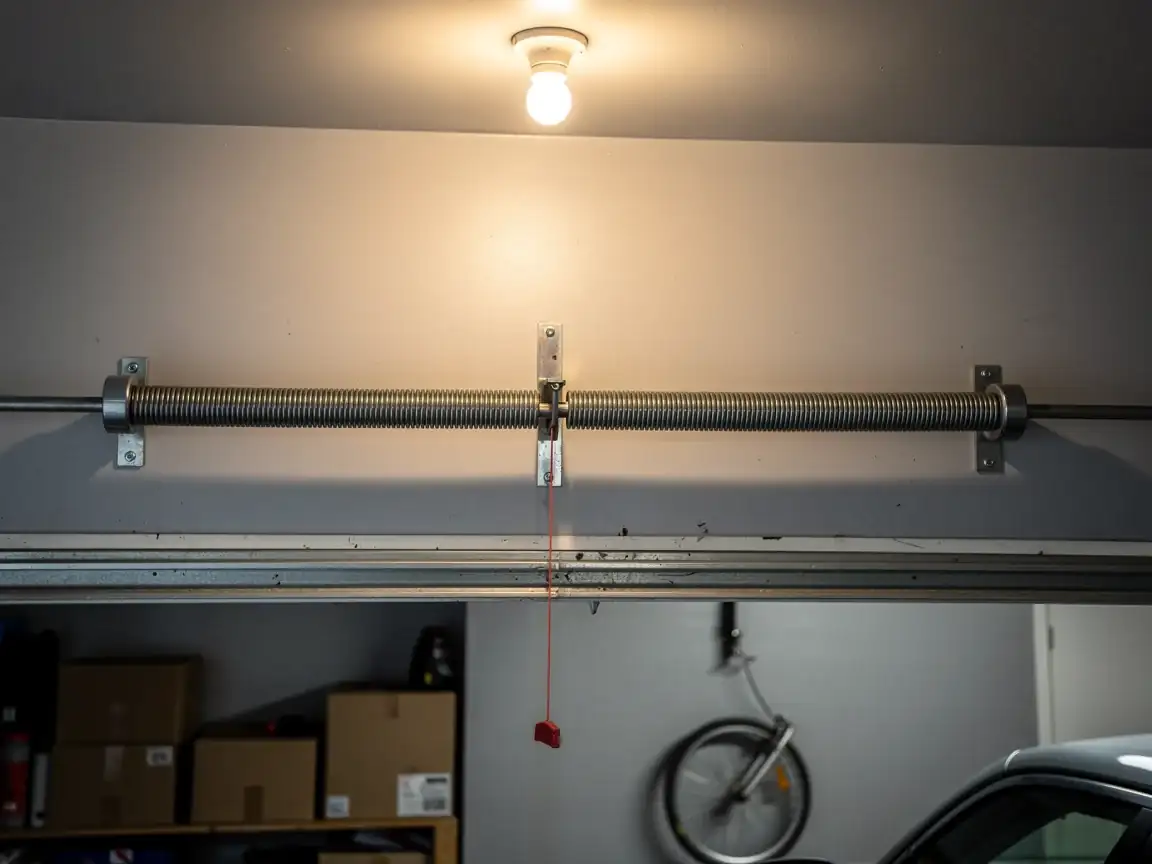
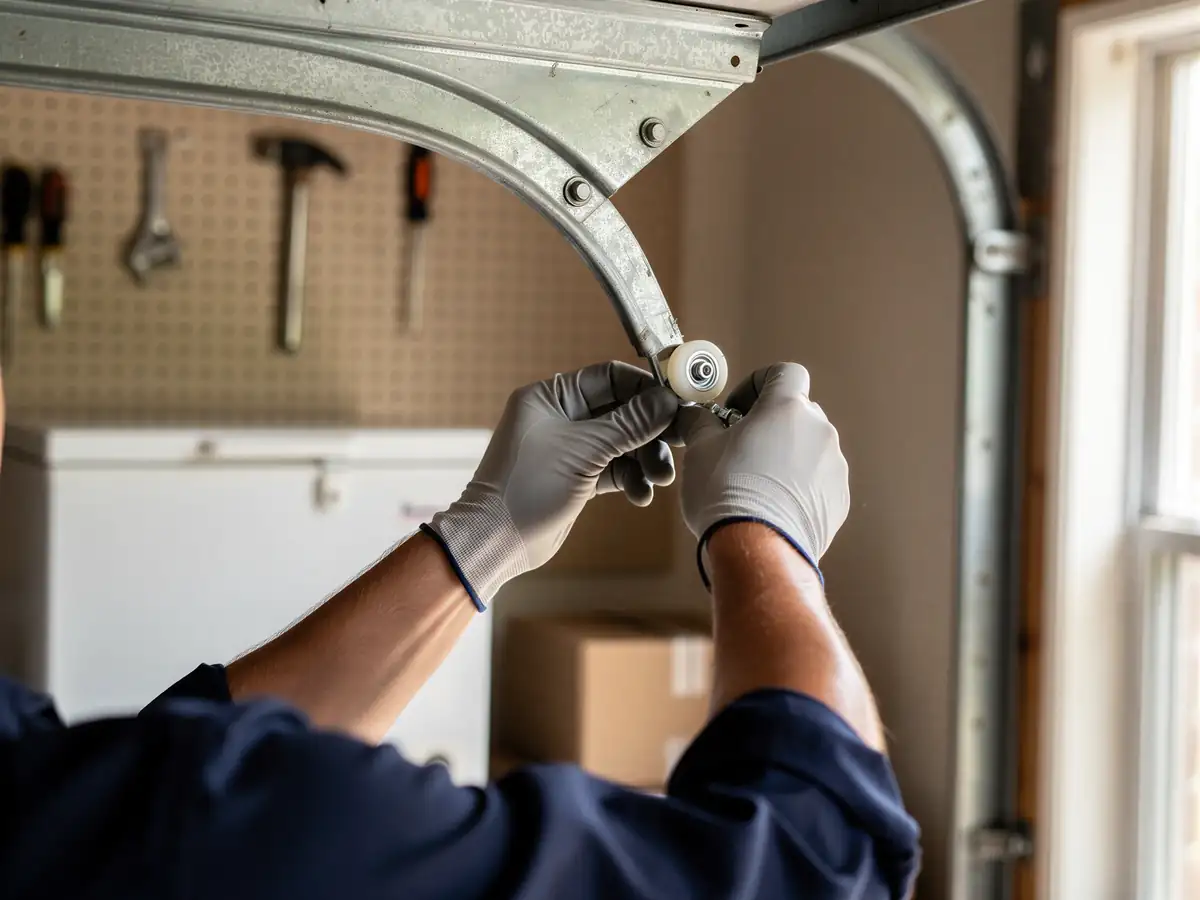
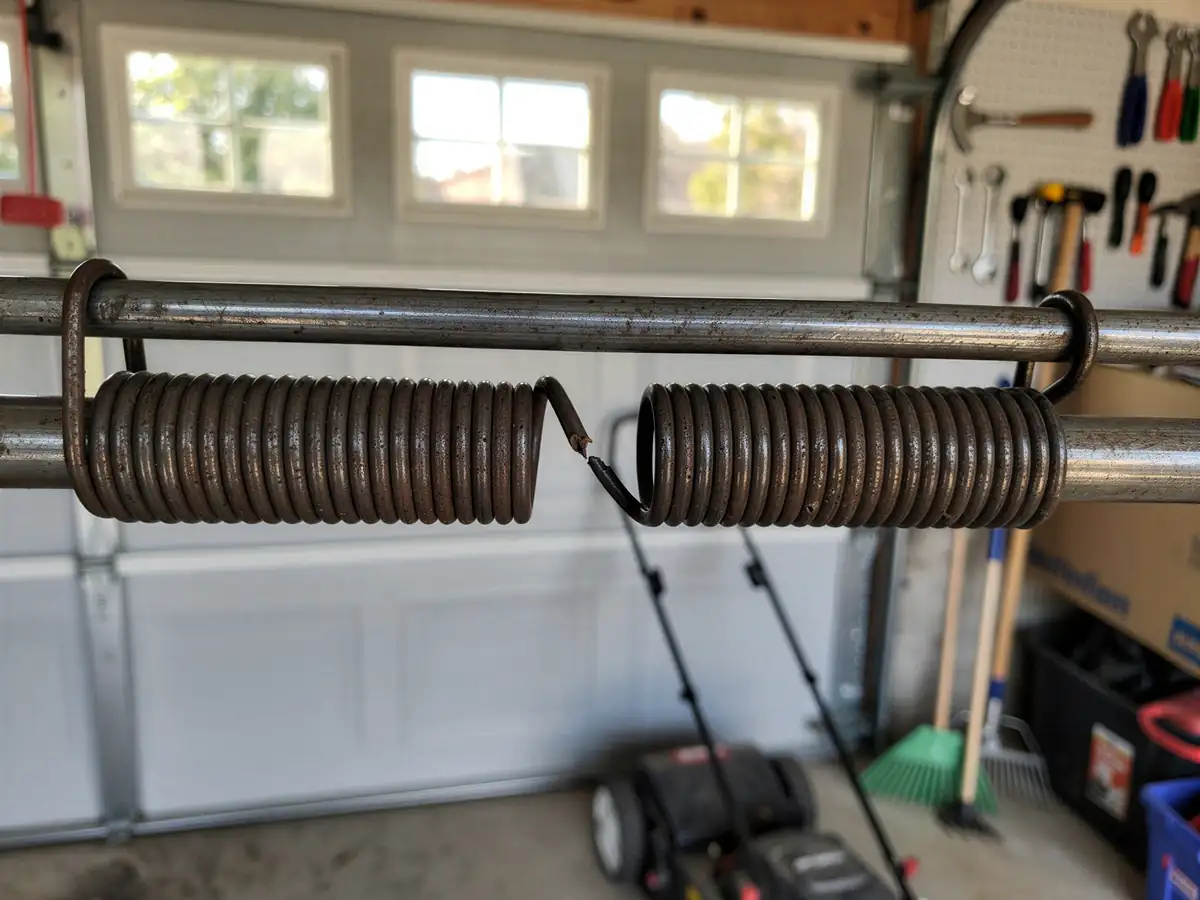
What you can safely do yourself: check whether the door is binding on a bent track before you assume it's the spring, listen for the specific loud bang that means a torsion spring let go versus the slower sag of a stretched extension spring, and unplug the opener so it doesn't keep trying to drive a door that has no spring tension left to help it. Past that, this is a two-person job with the right winding bars, not a weekend project. If you're not sure which kind of spring you have, a photo of the spring assembly tells us more than a description over the phone.
What It Costs
We don't publish a flat number here because spring jobs in Roseville split into two real categories, and the split is about the house's age, not the street. A single torsion spring swap on original hardware from the late 1960s or 70s is a different job than replacing a pair of springs sized for a heavier insulated door that got retrofitted later. The tension calculation, the wire gauge, and whether the drum and shaft need work too all change the number.
What we can tell you is what drives the cost up: a second broken spring you didn't know about, a bent shaft from running the door on one spring too long, or cables that frayed under the same load. We'll quote the job on site once we've looked at the actual spring, the drum, and the shaft, not guessed it from a model number over the phone.
Parts We Carry
We stock the torsion spring sizes that match the housing stock across this part of the service area
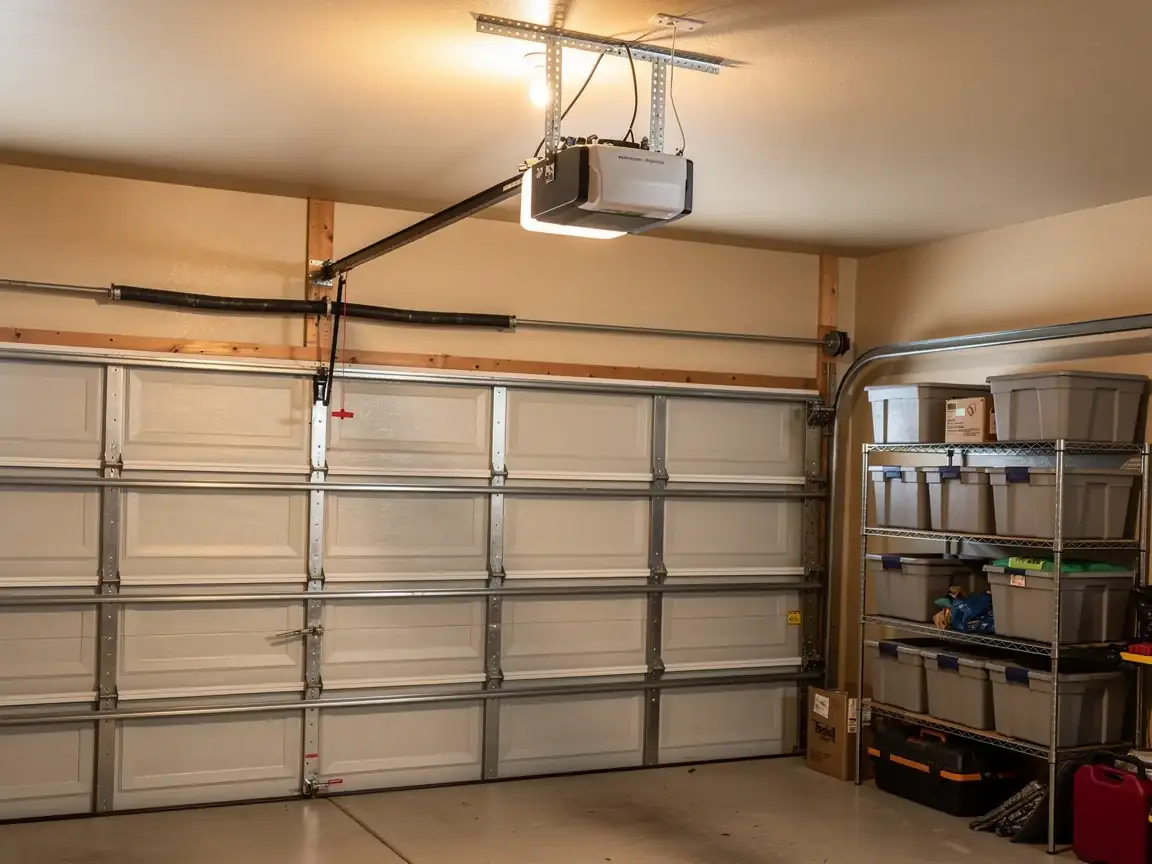
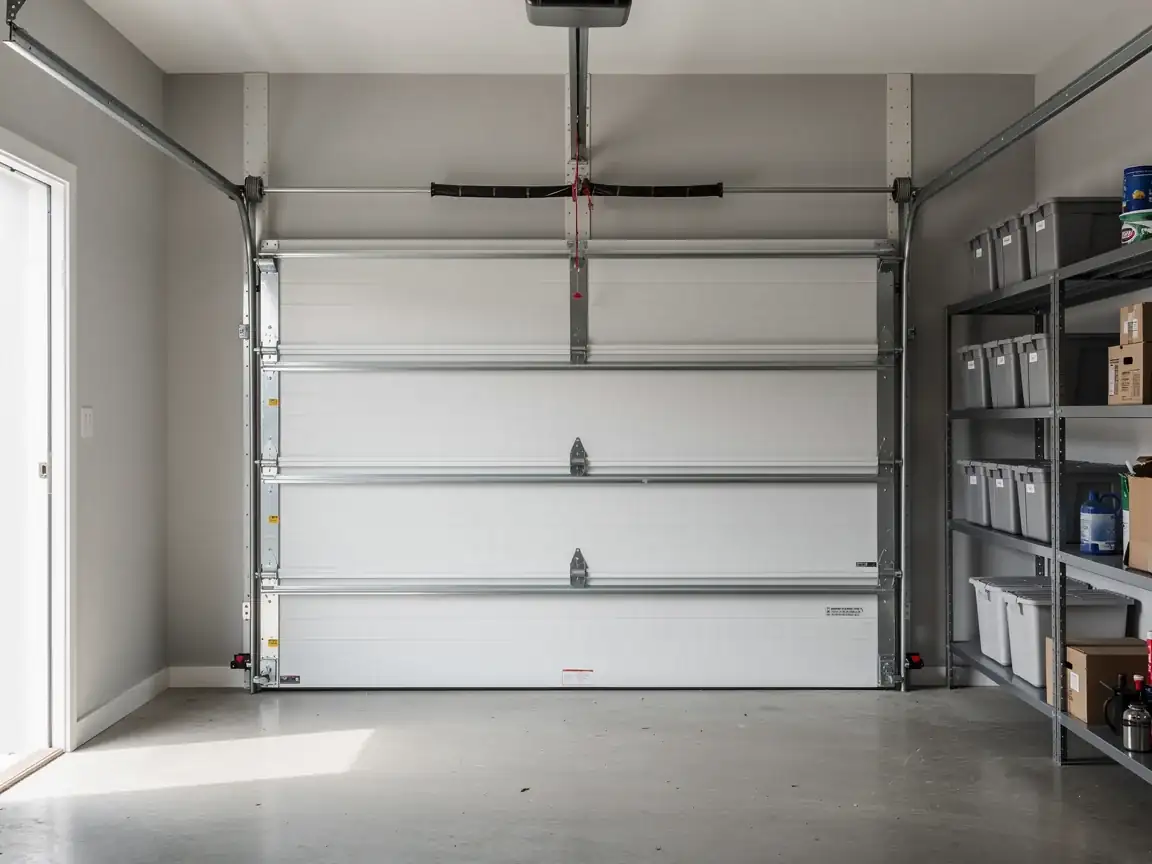
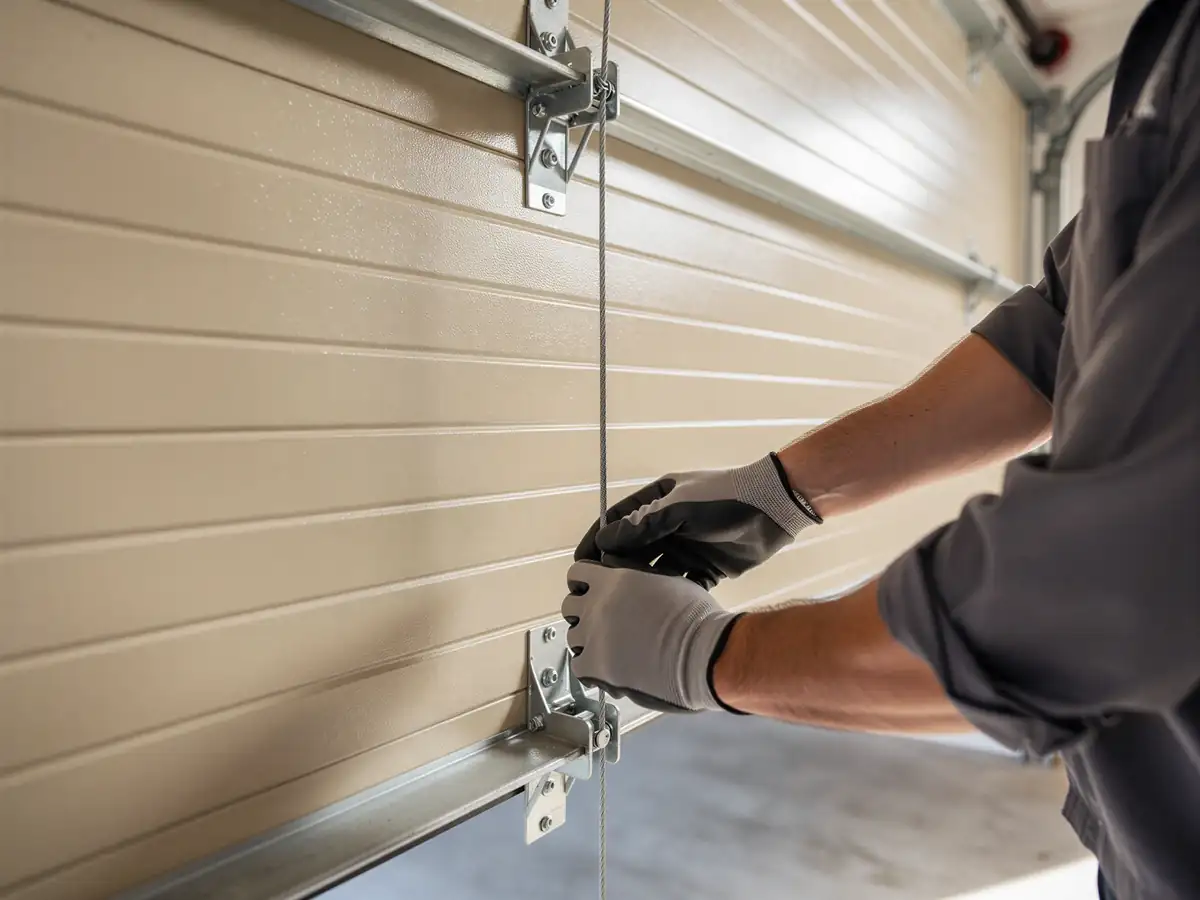
The wire diameters and wind lengths that were standard on doors built through the 1960s, 70s, and into the 80s. That covers the bulk of what we run into on a Roseville call. We also carry extension spring pairs and the safety cables that should run through them, since plenty of garages still have an extension setup rather than a torsion bar overhead.
What we don't carry on the truck is every obsolete bracket or drum from a door that's been discontinued for twenty years
If your hardware is that far gone, we'll tell you straight whether it's worth sourcing a matching part or whether a new spring system on updated hardware is the better money. We'd rather say that up front than have you wait on a part that may not show up.
How It Shows Up
The door won't lift, or it lifts a few inches and the opener strains against it - that's the classic sign a torsion spring has broken, usually with a bang loud enough to hear from inside the house. On an extension spring setup the failure is quieter: the door gets heavier to lift by hand over weeks, then one side sags lower than the other because one spring stretched out before the other did.
On the older end of Roseville's housing stock - homes going back toward the start of that 1960s-70s build window - we also see springs that haven't failed outright but have lost enough temper from age and cold that the door is wildly out of balance, slamming down instead of lowering smooth. That's worth fixing before it breaks, not after.
What Can Go Wrong
A spring that fails and gets ignored doesn't stay a spring-only job. The opener keeps trying to do the spring's work, which burns out the drive gear or strips the sprocket faster than it should wear. The cable on the side with the broken spring can jump the drum, kink, or fray, and a frayed cable under load is its own hazard separate from the spring.
Cold is the other factor we watch for here. This area sits in a cold climate band, and steel springs lose some flex in deep cold - a spring that's been slowly weakening all year is more likely to let go on the first hard freeze than in July. That's not unique to any one house, but it's a real reason a marginal spring picks the worst week to finally snap.
Why It Happens Here
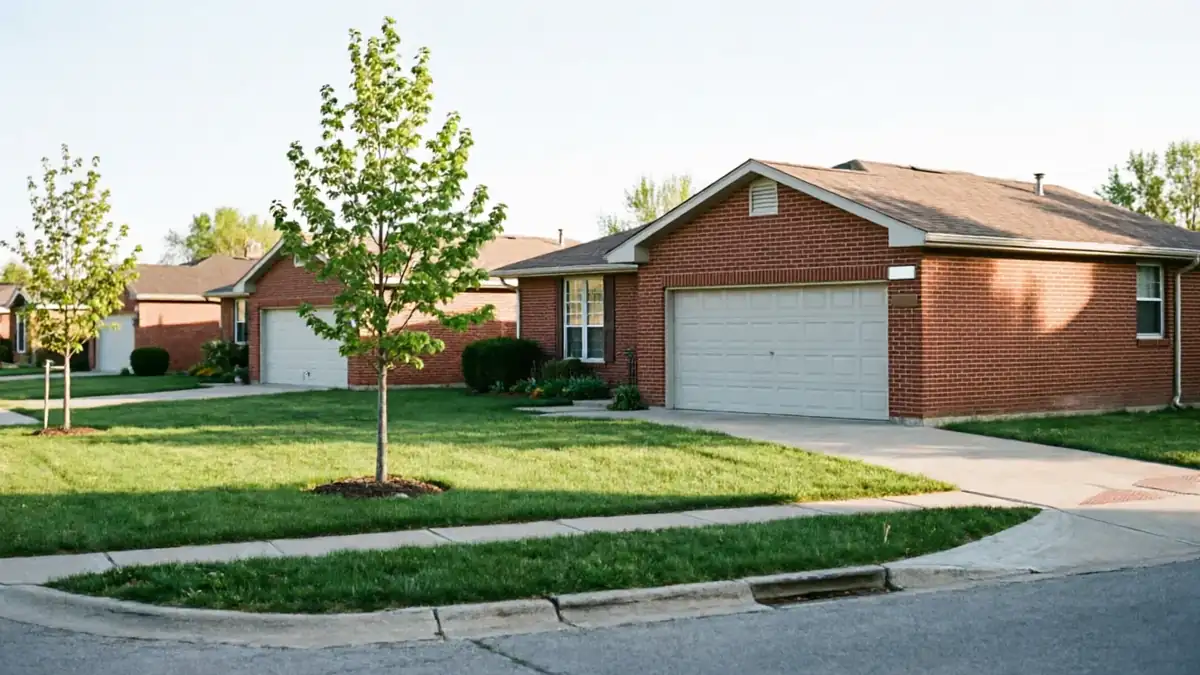
Roseville's housing stock mostly dates to 1968
Squarely inside the broader 1960s-70s band that covers most of the named areas we work across - 33 of them in all, by the Census read on this service territory. That means original torsion hardware sized for lighter, uninsulated doors is still common, and a lot of it is nearing or past the spring's working life even if nobody's touched it since the house was built.
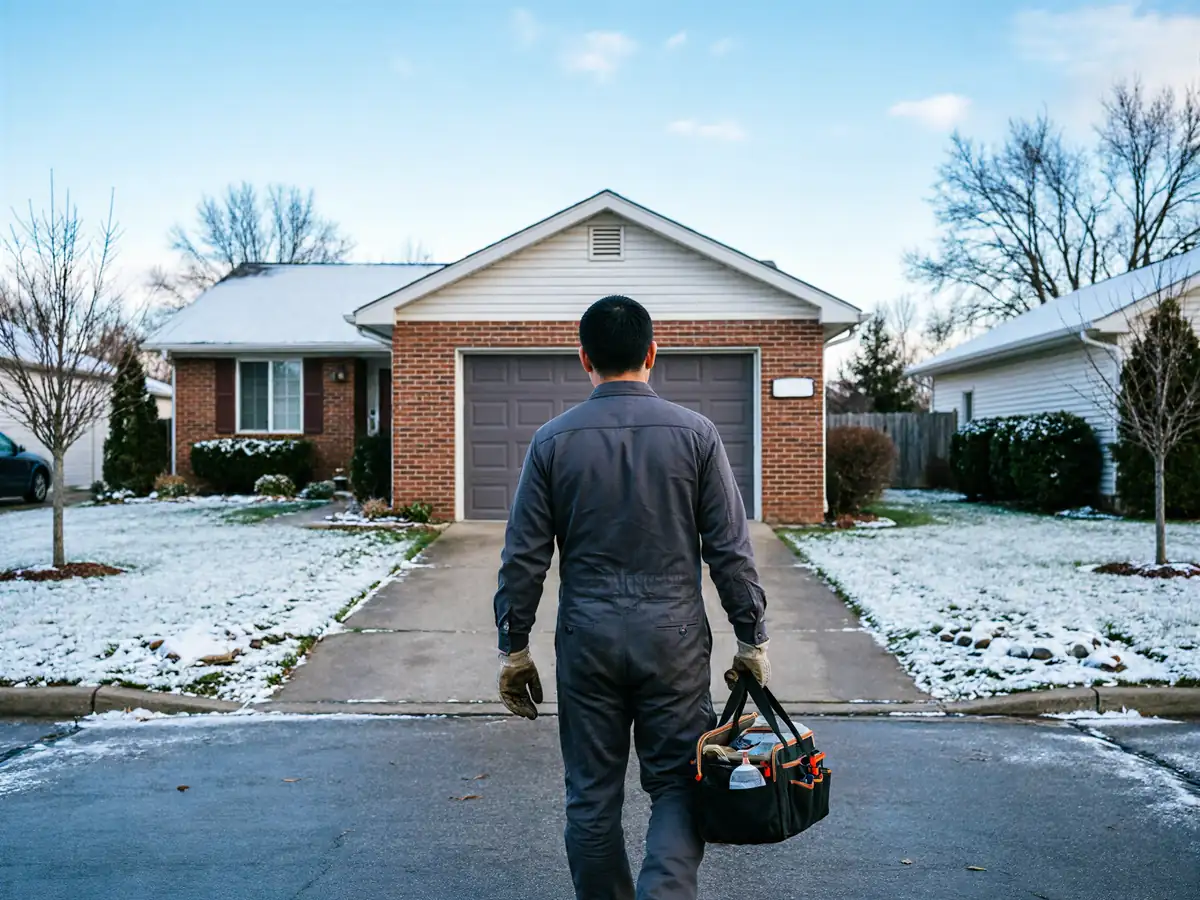
We drive out to Roseville from our Woodbury base, about 14 miles each way
So we're not a local depot - we're the crew that comes to you. Across the wider service area median household income runs a bit over $93,000, with roughly 77,000 owner-occupied houses among 168,000 households total, which tells you this is a region full of homeowners dealing with doors of roughly the same vintage, not a scattering of outliers.
- 14 miles
- 77,000 owner-occupied
- 168,000 households